
Construction of AI Data Centre: How the Industry Is Building the Backbone of the Digital Economy
The rapid rise of artificial intelligence is transforming industries at an unprecedented pace—and behind every AI model, cloud platform, and real-time application lies a critical piece of infrastructure: the data centre.
In Canada, and particularly in growing urban regions like Toronto, interest in the construction of AI data centre facilities is accelerating. Tech companies, investors, and governments are all recognizing that data infrastructure is no longer optional—it’s essential.
However, building AI-ready data centres is far more complex than traditional commercial construction. These facilities require specialized design, advanced engineering, and careful coordination to meet performance, energy, and scalability demands.
For developers, contractors, and stakeholders, the challenge is clear: How do you design and deliver data centres that can support the next generation of AI technologies—efficiently, sustainably, and at scale?
This article explores the key challenges, considerations, and strategies shaping the construction of AI data centres, and how the construction industry is adapting to meet this growing demand.

Why the Construction of AI Data Centre Facilities Is Growing Rapidly
Artificial intelligence is driving an explosion in data processing needs.
From machine learning models to real-time analytics and cloud-based platforms, AI systems require enormous computational power—and that power must be housed somewhere.
This is fueling demand for:
Hyperscale data centres
Edge computing facilities
High-performance computing (HPC) environments
In markets like Toronto, several factors are accelerating growth:
Strong tech ecosystem
Access to skilled talent
Reliable infrastructure
Proximity to major population centers
As a result, the construction of AI data centre projects is becoming a major segment within commercial and industrial development.
Key Challenges in AI Data Centre Construction
While demand is growing, delivering these projects is not straightforward. AI data centres introduce a unique set of challenges that differ significantly from traditional buildings.
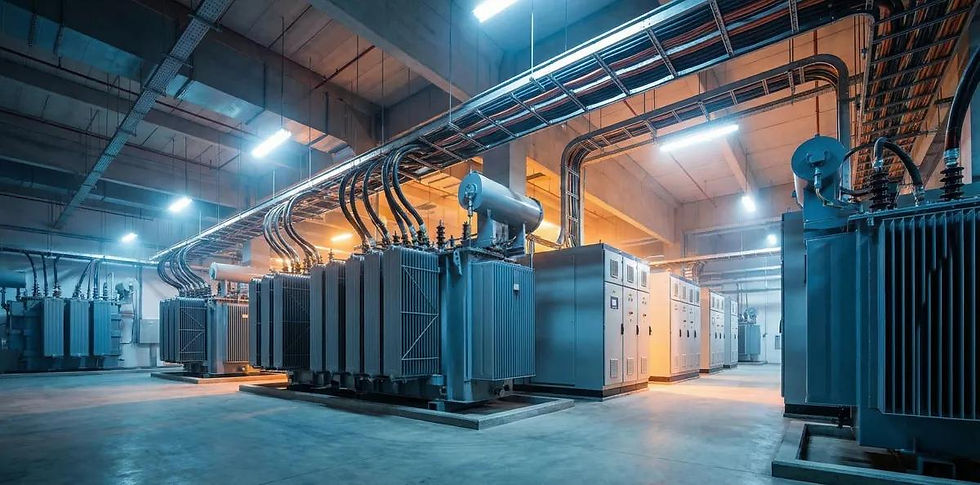
Power Requirements and Energy Infrastructure
AI workloads consume massive amounts of electricity.
Unlike typical office or residential buildings, data centres require:
High-capacity electrical connections
Redundant power systems
Backup generators and UPS systems
In many cases, access to sufficient power supply becomes the primary constraint—not the building itself.
Cooling and Thermal Management
AI servers generate significant heat.
Efficient cooling systems are essential to maintain performance and prevent equipment failure.
Modern facilities often incorporate:
Liquid cooling systems
Advanced HVAC configurations
Hot aisle/cold aisle containment
Designing and integrating these systems requires specialized expertise and early coordination.

Speed to Market
Technology evolves quickly—and delays can be costly.
Developers are under pressure to:
Accelerate approvals
Shorten construction timelines
Deliver facilities faster than ever before
This creates a need for streamlined project delivery and efficient preconstruction planning.
Site Selection and Zoning
Not every site is suitable for a data centre.
Key considerations include:
Proximity to power infrastructure
Fiber connectivity
Zoning regulations
Land availability
Urban environments like Toronto add additional complexity due to land constraints and approval processes.
Sustainability and Environmental Impact
Data centres are energy-intensive, making sustainability a major concern.
Stakeholders are increasingly focused on:
Reducing carbon emissions
Improving energy efficiency
Incorporating renewable energy sources
Balancing performance with sustainability is one of the biggest challenges in modern data centre construction.

Designing for Performance: What Makes AI Data Centres Different
The construction of AI data centre facilities requires a performance-first mindset.
Unlike traditional buildings, these facilities are designed around operational efficiency and long-term reliability.
Key Design Priorities
Redundancy: Systems must remain operational even during failures
Scalability: Facilities should accommodate future expansion
Efficiency: Minimizing energy consumption is critical
Security: Physical and digital security are essential
Practical Design Strategies
Successful projects often incorporate:
1. Modular Design
Allows phased expansion
Reduces initial capital costs
Improves flexibility
2. Prefabrication
Speeds up construction timelines
Improves quality control
Reduces on-site labour requirements
3. Integrated Design Teams
Early collaboration between architects, engineers, and contractors
Reduces design conflicts
Improves overall efficiency
How Builders Are Adapting to AI Infrastructure Demands
The construction industry is evolving to meet the needs of AI-driven infrastructure.
Increased Use of Prefabrication and Modular Construction
To accelerate delivery, many projects are incorporating:
Prefabricated mechanical and electrical systems
Modular data centre components
Off-site fabrication strategies
This approach improves efficiency and reduces risk.

Advanced Project Coordination
Given the complexity of AI data centres, coordination is more important than ever.
Builders are leveraging:
Building Information Modeling (BIM)
Digital project management tools
Integrated delivery methods
These tools help align stakeholders and reduce delays.
Focus on Preconstruction Planning
Many of the biggest risks in data centre construction occur before construction begins.
Effective preconstruction includes:
Detailed cost planning
Early system integration
Risk assessment
Scheduling optimization
This is where experienced construction management teams play a critical role.
The Role of Construction Management in AI Data Centre Projects
Delivering complex infrastructure like AI data centres requires more than just building expertise—it requires strategic coordination.
Firms like Fusioncorp, with experience in commercial construction and complex project delivery, contribute by:
Managing multidisciplinary teams
Coordinating design and engineering processes
Overseeing budgets and timelines
Ensuring compliance with building codes and regulations
While not traditionally associated with data centres alone, this type of construction management expertise is highly transferable to AI infrastructure projects.
Opportunities for the Canadian Construction Industry
The rise of AI is creating new opportunities across the construction sector.
Emerging Trends
Growth in specialized construction segments
Increased demand for skilled trades and technical expertise
Expansion of infrastructure projects across urban regions
What This Means for Toronto
Toronto is well-positioned to benefit from this trend due to:
Strong infrastructure
Established construction industry
Growing technology sector
However, to fully capitalize on these opportunities, the industry must continue to adapt.
Practical Strategies for Successful AI Data Centre Construction
For developers and builders entering this space, several strategies can improve project outcomes:
1. Prioritize Early Planning
Identify power, cooling, and infrastructure needs as early as possible.
2. Build Strong Partnerships
Collaborate with experienced consultants, engineers, and contractors.
3. Focus on Flexibility
Design facilities that can evolve with technology.
4. Embrace Innovation
Leverage modular construction, prefabrication, and digital tools.
5. Plan for Sustainability
Incorporate energy-efficient systems and renewable solutions.
Conclusion
The construction of AI data centre facilities is rapidly becoming one of the most important segments in modern construction.
As demand for AI continues to grow, so does the need for infrastructure capable of supporting it. However, delivering these projects requires a new approach—one that prioritizes performance, efficiency, and adaptability.
From power and cooling challenges to speed and sustainability, AI data centres push the boundaries of traditional construction. Success in this space depends on early planning, strong collaboration, and a willingness to embrace innovation.
For the Canadian construction industry, and particularly in markets like Toronto, this represents both a challenge and an opportunity.
Those who adapt will play a key role in building the digital backbone of the future.
If you're interested in learning more about how construction strategies are evolving to meet modern infrastructure demands, exploring insights from experienced construction management firms can provide valuable perspective on what it takes to deliver complex projects successfully.


Comments